A maxillofacial surgeon trains in medicine as well as dentistry, and operates on the jaw and the face rather than only the teeth in it. That is why the difficult third molar, the cyst found on an X-ray and the jaw that will not take an implant end up here.
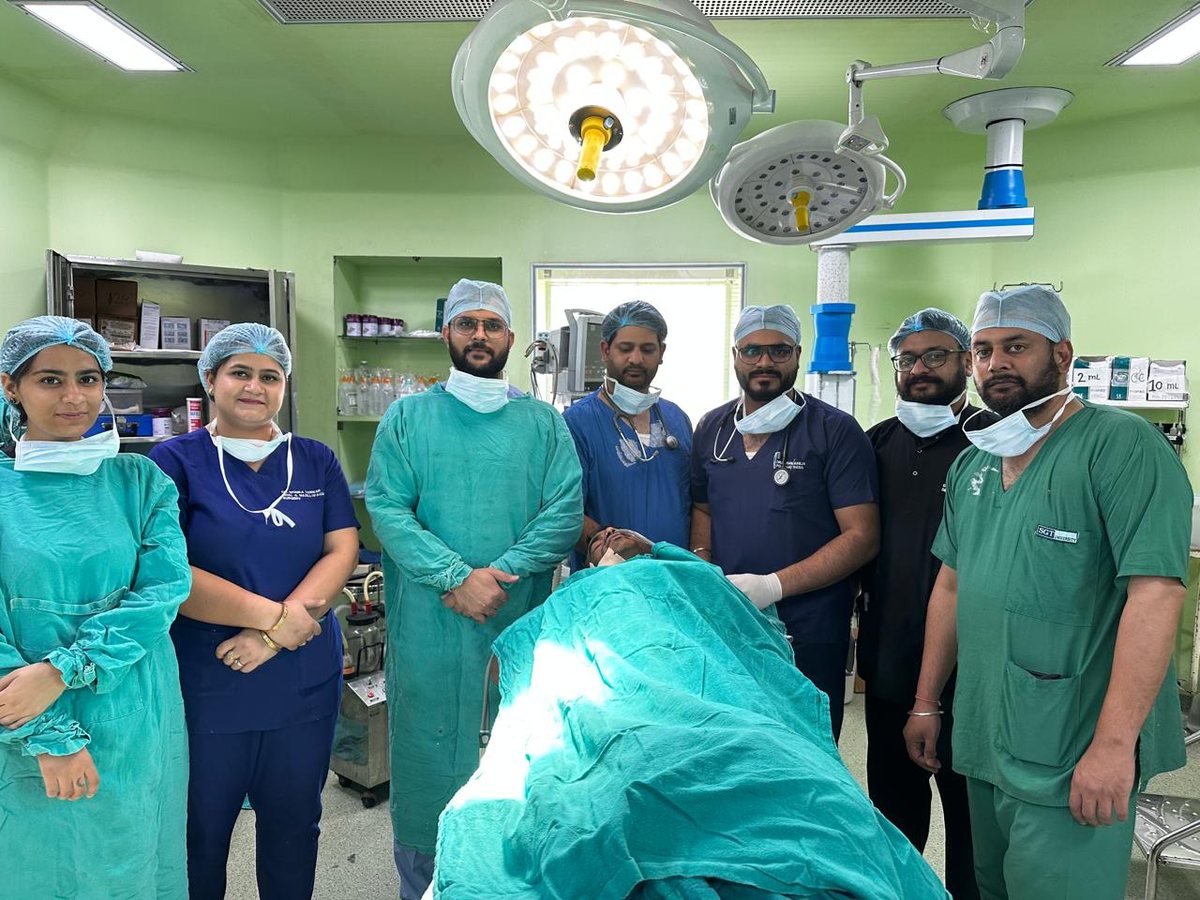
Everything below is done under a surgeon rather than attempted chairside. Major cases go to a full operating theatre with an anaesthetic team; day-to-day work is done at the Sector 48 clinic.
Deeply buried third molars, including roots sitting against the inferior alveolar nerve. Planned from a scan so the real risk is known before the day, not discovered during it.
Read more02A lesion found on a routine X-ray needs someone who can say what it is, how urgent it is, and what removing it actually involves.
Read more03Including the mouths turned away elsewhere for lack of bone, because grafting and sinus lift are done here rather than referred on again.
Read more04The groundwork that makes an implant possible where the bone has shrunk away from the missing tooth.
Read more05Fractures and injuries to the facial skeleton, repaired under theatre conditions.
Read more06Where the bite and the jaw relationship, not the teeth, are the thing that is wrong.
Read moreMost people arrive with an OPG or a CBCT somebody else took. Send it on WhatsApp before you come in and the consultation starts from a plan rather than from scratch.
The surgeon examines you, reads the imaging, and says what the problem is, what the options are, and what each one would involve. Including leaving it alone, when that is genuinely an option.
What it takes, how many visits, and the cost, told to you before anything begins. Surgery is not priced after the fact.
Day-to-day work at the Sector 48 clinic under local anaesthetic. Major cases in a full operating theatre with a surgical and anaesthetic team.
Written aftercare, and review visits built into the plan. You are told what is normal, what is not, and when to call.
For routine extractions and fillings, a general dentist is the right person. A surgeon is for what sits outside that: teeth that will not come out simply, anything involving the jawbone itself, and implants where the bone has to be rebuilt first. If you are unsure, send the X-ray and you will be told which you need.
Most of it does not need to be. Day-to-day surgery is done under local anaesthetic at the clinic. General anaesthetic and a theatre are used where the case genuinely calls for it, and that is discussed with you rather than decided for you.
There is usually swelling and discomfort for a few days, managed with prescribed medication. Patients here most often describe the procedure itself as smoother than they expected — the reviews say it more plainly than we can.
It depends entirely on the case: a straightforward extraction is a few days, a graft or a jaw procedure is longer and is staged over months. You will be given the real timeline at the consultation, not an optimistic one.
Yes, and a good share of the work arrives that way. Send the OPG or CBCT on WhatsApp and you will get a plan back the same day.
Most people arrive with an X-ray somebody else took. Send it on WhatsApp and you will get an honest answer on what it needs — including when it needs nothing.