Sleep Apnea and Jaw Structure: When Is Jaw Surgery the Right Treatment?
If you snore loudly, wake up tired, or have been told you stop breathing during sleep, the cause may be more than just soft tissue in your throat. In many patients, the size and position of the jaw plays a direct role in obstructive sleep apnea (OSA). Understanding this connection helps you and your doctor decide between oral appliances, CPAP, or corrective jaw surgery.
How Jaw Structure Affects Breathing During Sleep
Obstructive sleep apnea happens when the airway at the back of the throat collapses or narrows repeatedly during sleep. The tongue, soft palate, and throat muscles relax during sleep, but if the jaw is naturally small, set back, or narrow, there is less room for the tongue to sit forward. This pushes the tongue base backward, narrowing the airway further.
Common jaw-related contributors include:
- A recessed lower jaw (retrognathia)
- A narrow upper jaw or palate
- An overbite or significant bite mismatch
- A jaw that did not grow to full size during childhood
These features do not always cause visible facial changes, which is why many people with jaw-related OSA are unaware of the underlying cause until a sleep study and jaw assessment are done together.
Diagnosing the Jaw's Role in Sleep Apnea
A sleep study (polysomnography) confirms whether you have OSA and how severe it is. Alongside this, a dental or maxillofacial evaluation looks at your jaw size, bite, and airway space using clinical exam and imaging such as a lateral cephalogram or CBCT scan. This combined approach helps identify whether the jaw structure is a major factor or a smaller contributing one.
Non-Surgical Options: Oral Appliances and CPAP
For many patients with mild to moderate OSA, non-surgical treatment is the first and often sufficient approach.
CPAP Therapy
Continuous positive airway pressure (CPAP) keeps the airway open using a machine and mask worn during sleep. It remains the most researched and reliable treatment for moderate to severe OSA, though some people find it uncomfortable to use consistently.
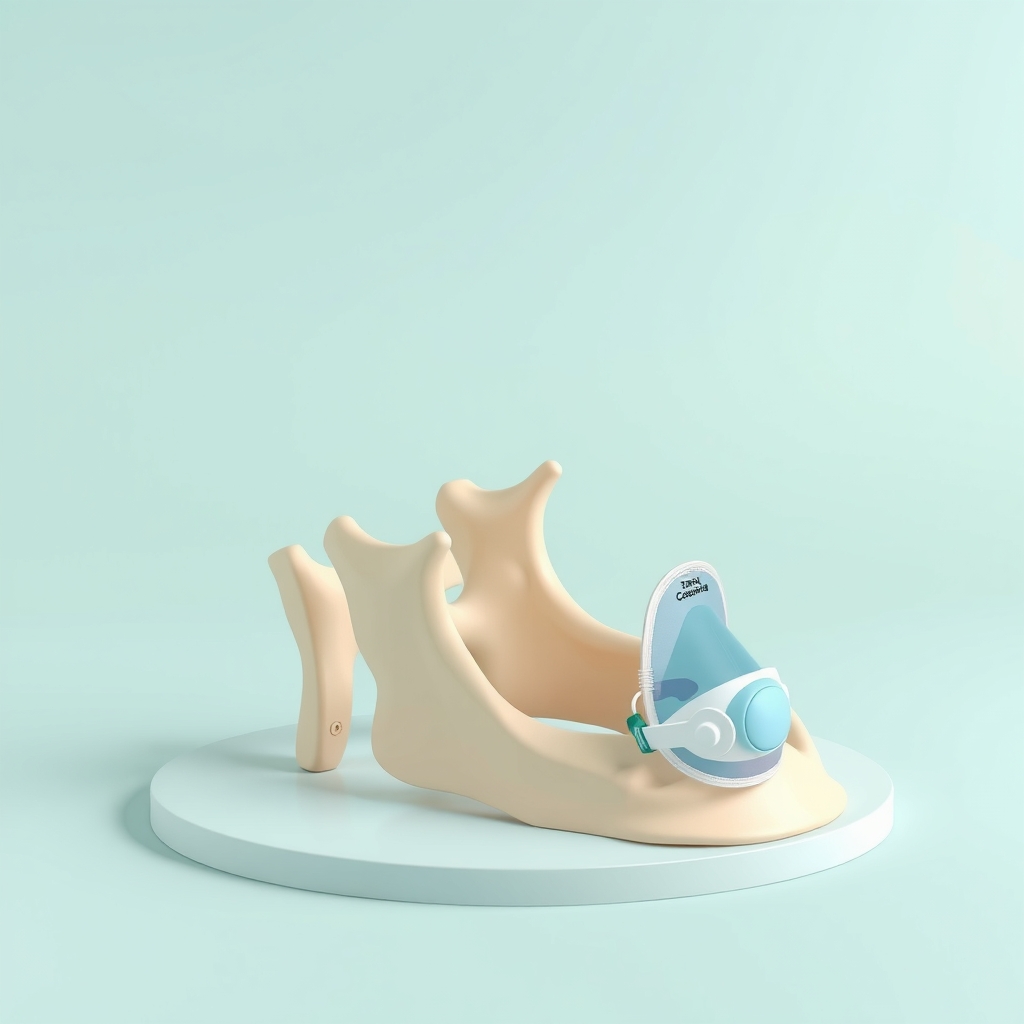
Oral Appliances (Mandibular Advancement Devices)
These custom-made devices are worn at night and gently hold the lower jaw slightly forward, which helps keep the tongue from blocking the airway. They are usually recommended for:
- Mild to moderate OSA
- Patients who cannot tolerate CPAP
- Those with a mild jaw-related component to their airway narrowing
Oral appliances are fitted after a dental evaluation to check that your teeth and jaw joints can support the device comfortably.
When Corrective Jaw Surgery Is Recommended
Orthognathic (corrective jaw) surgery repositions the upper jaw, lower jaw, or both to create more space for the tongue and airway. It is generally considered when:
- OSA is moderate to severe and jaw structure is a clear contributing cause
- CPAP or oral appliances have not worked well or are not tolerated long-term
- There is a significant jaw or bite abnormality alongside sleep apnea
- The patient is otherwise fit for surgery and prefers a more permanent structural solution
The most common procedure for this purpose is maxillomandibular advancement (MMA), where both jaws are moved forward to widen the airway space permanently. This is a significant surgical procedure requiring hospital admission, a period of jaw stabilization, and several weeks of recovery, but it has shown good long-term success in appropriately selected patients.
Comparing the Options
| Treatment | Best suited for | Nature of treatment |
|---|---|---|
| CPAP | Mild to severe OSA | Nightly device, non-invasive, reversible |
| Oral appliance | Mild to moderate OSA, CPAP intolerance | Custom dental device, reversible |
| Corrective jaw surgery | Moderate to severe OSA with jaw cause, failed other treatments | Surgical, structural, longer-lasting |
Making the Right Choice
There is no single correct answer for every patient. The decision depends on the severity of your OSA, your jaw structure, how well you tolerate CPAP, and your overall health. This is best worked out with a team approach involving your sleep physician, ENT specialist, and a maxillofacial surgeon or dentist experienced in airway-related jaw issues.
If you are in Gurugram and want to understand whether your jaw structure is contributing to your sleep apnea, a clinical evaluation combined with your sleep study report can help clarify the most suitable next step, whether that is an oral appliance, continued CPAP use, or a surgical consultation.
Cost Considerations
Costs vary widely depending on whether you need a diagnostic scan, an oral appliance, or surgery, and whether treatment is combined with orthodontic care. As a general guide, a custom oral appliance typically falls in the range of ₹15,000 to ₹35,000 in Gurugram, while corrective jaw surgery costs typically range much higher depending on hospital stay and surgical complexity. Your surgeon will give you a specific estimate only after a full evaluation.
Have questions about your teeth?
Dr Lokesh Yadav · 3rd floor, above Cut and Style Salon, opp. Vega School, Vipul World, Sector 48
Frequently asked questions
Can sleep apnea be cured without surgery?
Many people manage obstructive sleep apnea well with CPAP therapy or an oral appliance, especially in mild to moderate cases. Surgery is usually considered when these options fail, are not tolerated, or when a clear jaw structural cause is present.
How do I know if my sleep apnea is related to my jaw?
A sleep study confirms the diagnosis, but a dental or maxillofacial evaluation with X-rays can show if a small or recessed jaw, narrow airway, or bite problem is contributing. This is often assessed together with your ENT or sleep physician.
Is jaw surgery for sleep apnea painful or risky?
It is a major surgery with swelling and a recovery period of several weeks, but it is performed under general anesthesia with pain well controlled through medication. Serious complications are uncommon when done by an experienced surgical team.
Will an oral appliance stop my snoring completely?
Oral appliances reduce snoring and mild to moderate apnea for many patients by holding the jaw slightly forward, but results vary by person. Follow-up sleep studies help confirm how well it is working for you.
Treatment costs mentioned on this page are indicative ranges for the Gurugram region. Your exact cost depends on your case and will be confirmed after a clinical examination at the clinic.